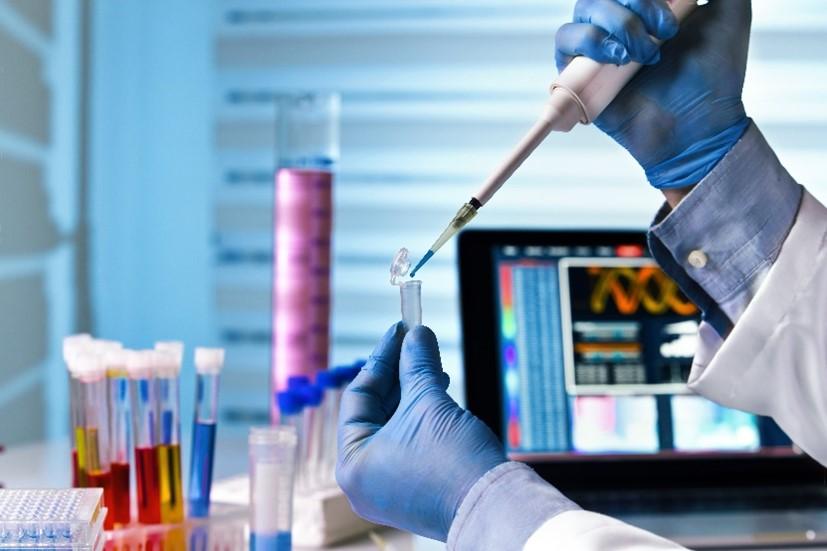

The impact of artificial intelligence (AI) in research labs is growing by the day and it’s no longer a technology that is “on the horizon”. AI is a class of technology that is top of mind for many R&D information technology professionals. Some would say, artificial intelligence is transforming scientific discovery, but what is it really, and what should R&D labs be thinking about?
The revolutionary impact of artificial intelligence (AI) on research and development (R&D) labs is redefining the way discoveries are made and innovations are forged. AI’s ability to analyze complex data, uncover patterns, and accelerate experimentation fundamentally reshapes the scientific landscape, propelling labs into a new era of efficiency and productivity.
“Life science leaders will recognize AI for what it truly is — a highly potent tool that can facilitate significant progress in a field that continuously generates vast amounts of data that historically exceeded human capacity for comprehensive analysis.” – Gartner1
Organizations are investing more in digital infrastructure, prompting labs to integrate AI into current workflows for greater efficiency and faster drug discovery. AI-driven technologies help research labs automate routine tasks, analyze and interpret data, and create predictive models for drug discovery and development.

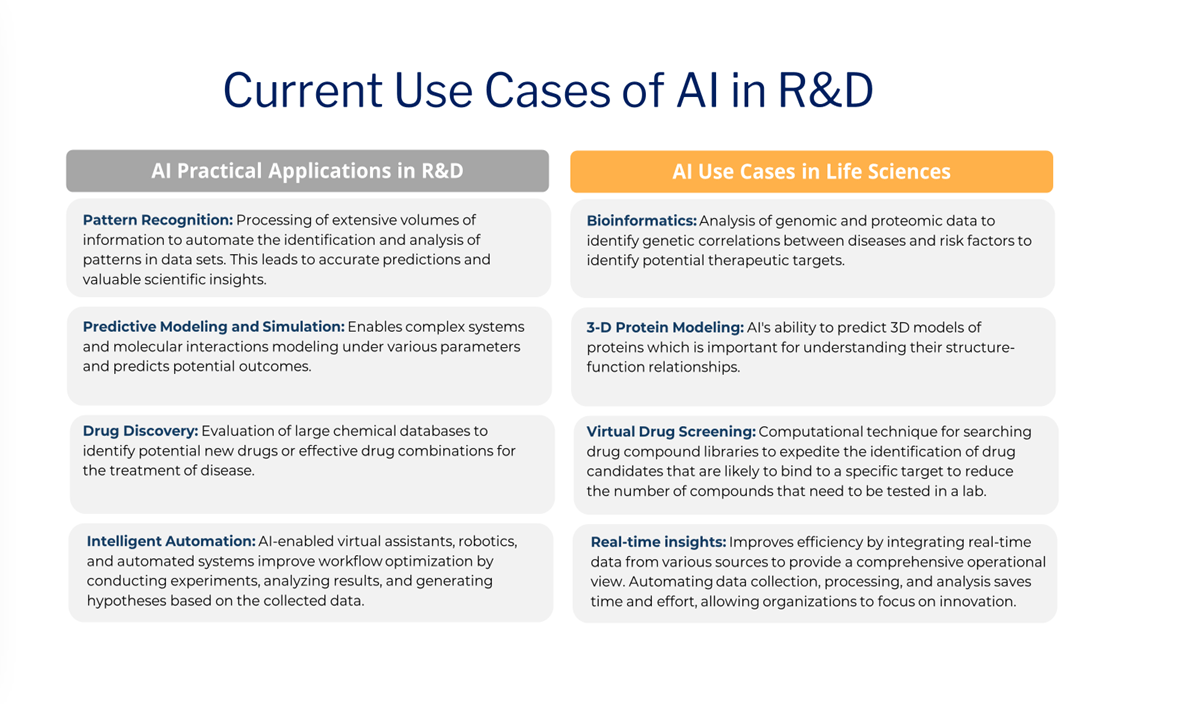
Practical Applications of AI in Scientific Discovery
AI’s role in scientific discovery is expanding rapidly due to the surge in data generated by labs worldwide. By analyzing extensive datasets, AI can uncover significant trends, forecast outcomes using existing data, and simulate detailed scenarios that are difficult to replicate in a lab setting.
The Importance of Effective Data Management in AI
AI models need quick and efficient access to vast data sets to identify patterns and make precise predictions. Enhancing data quality improves the accuracy and reliability of these models. Effective data management involves integrating information from various sources, including LIMS, ELN, databases, data lakes, and lab instruments, into a coherent dataset that can be used for training and validating AI models.
Ensuring accurate, complete, and consistent data quality begins with Master Data Management. This effort provides a solid framework for data governance and implements robust data security and privacy measures, all in compliance with relevant regulations.
Next Steps to Prepare for an AI-Ready Lab
In summary, AI enhances scientific discovery by identifying trends, predicting outcomes, and enabling simulation-based research. This opens up new avenues for research and innovation. However, establishing the optimal lab environment for effectively incorporating AI technology requires specialized knowledge and multi-disciplinary expertise. Partnering with experts with domain-specific knowledge and practical experience will provide valuable guidance for seamlessly integrating AI into your R&D strategy. This approach ensures scalability, maintainability, and operational excellence, driving advancements in science.
About Astrix
Astrix is the unrivaled market leader in creating & delivering innovative strategies, technology solutions, and people to the life science community. Through world-class people, process, and technology, Astrix works with clients to fundamentally improve business, scientific, and medical outcomes and the quality of life everywhere. Founded by scientists to solve the unique challenges of the life science community, Astrix offers a growing array of fully integrated services designed to deliver value to clients across their organizations. To learn the latest about how Astrix is transforming the way science-based businesses succeed today, visit astrixold.corals.io.
References:
1Harwood, R., et al. “Predicts 2024: Generative AI Brings New Value to Life Sciences”, Gartner, January 10, 2024.